
Why Expected Outcomes exists
The benchmarking frameworks the MSP industry runs on are real accomplishments. They've taught a generation of owners how to measure their businesses. What they don't do, and weren't built to do, is sit at the table on Monday morning and tell an owner what to change.
Expected Outcomes was built to fill that specific gap. Not to replace the frameworks, and not to relitigate what they got right. To take their numbers, their definitions, their published anchors, and add the prescriptive layer the industry has been missing.
What we hold to
We build strong leadership teams in MSPs by giving owners and their people the financial fluency to run the business well. We go deep into the how and why, not just the target, and we invest in the whole team, not only the owner.
Client trust is the asset.
When a client's interest and ours conflict, theirs wins.
Earn it first.
We do good work before we ask for more, and we let the work create the next engagement rather than pitch for it.
Equity and justice.
We aim for the intersection and make the call as close to it as we can.
The truth is the product.
We tell owners what's actually going on, even when it costs us the sale, because honest work is what holds a business accountable.
The world we're working toward: MSP owners running profitable, durable businesses because they have teams that understand the numbers and embrace the work. The best of them reach a scale, and a payday, they could not have reached alone.
The principals
Two co-founders, two specialties. The methodology and the implementation that makes it deliverable.
Built by an operator
Joshua Van Berkum
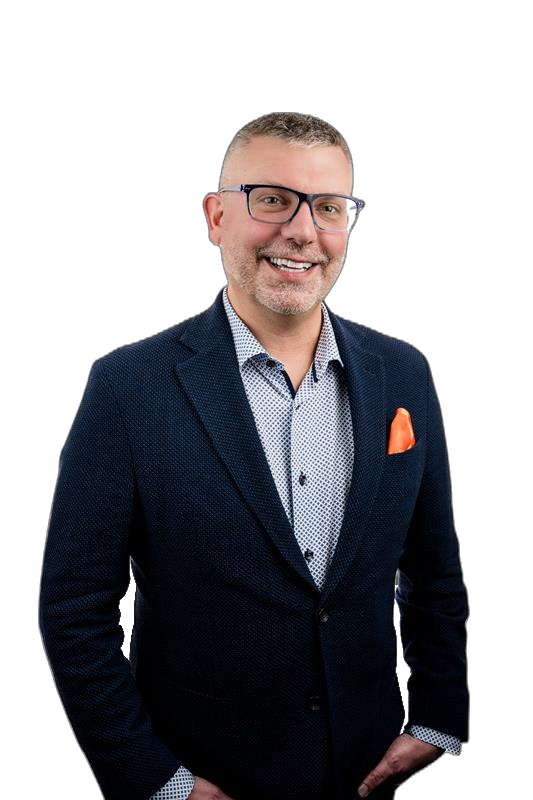
Joshua built and ran an MSP for eighteen years before exiting. A working service business, with technicians on a real schedule and agreements on a real renewal calendar, the kind of P&L where every line item has consequences for somebody by Friday. The methodology behind Expected Outcomes was first proven there.
After the exit he spent two and a half years as a senior consultant at a respected MSP advisory firm, teaching the math to operators across the industry and watching where it landed and where it didn't. Then he took a turnaround seat as VP of IT at an MSP that needed help, and built a team that recovered twenty points of EBITDA in twenty-four months using the same methodology. That engagement was the proof-of-concept for what's now Expected Outcomes.
He has facilitated two of Evolve's largest CFO peer teams, and currently facilitates an "Empire Builders" peer team for Evolve, working alongside MSP owners on the strategic decisions that define a service business. Expected Outcomes is what he's building in parallel.
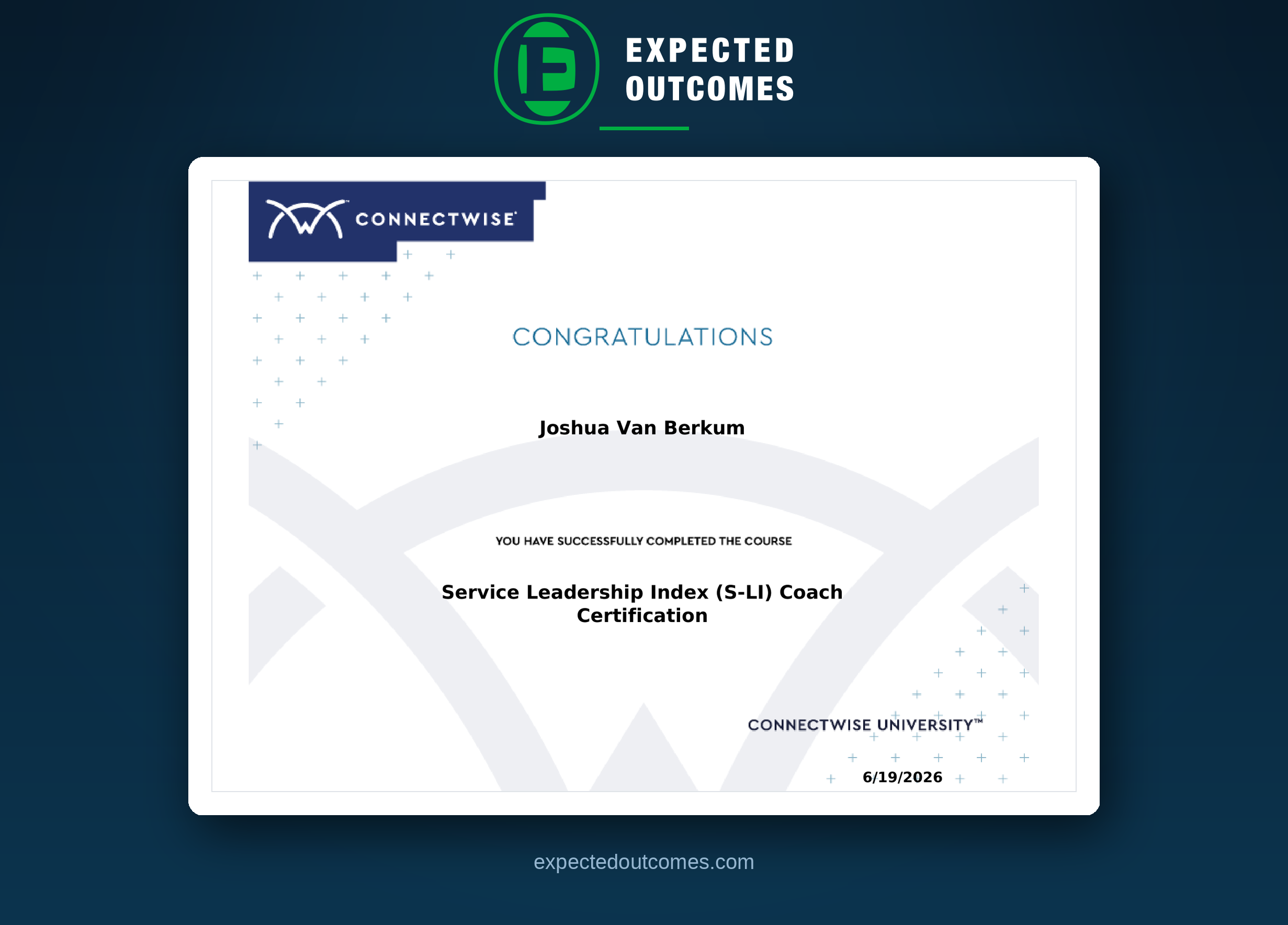
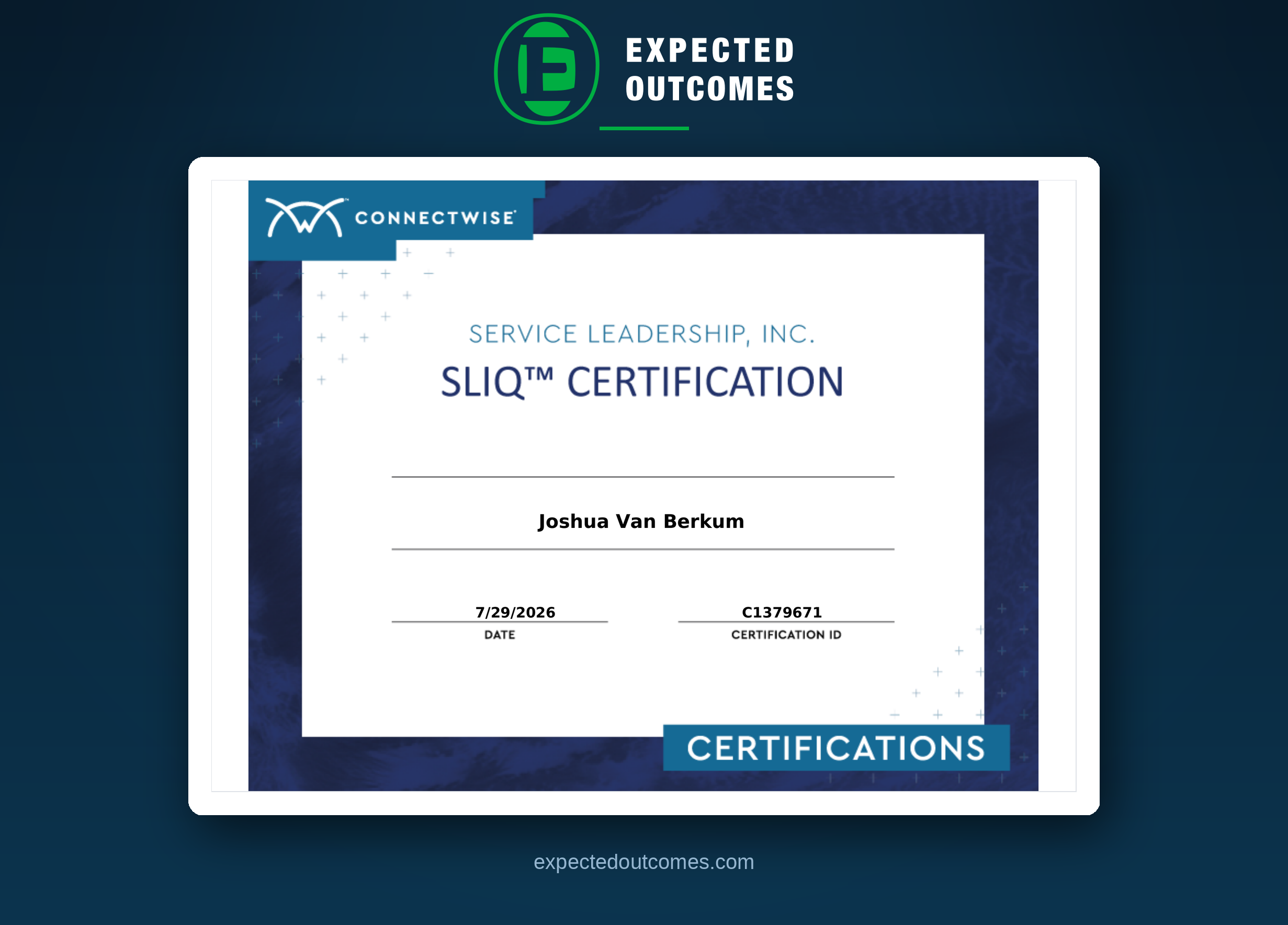
He holds Service Leadership's own certifications: the S-LI Coach Certification and the SLIQ™ Certification.
"I built Expected Outcomes because the frameworks I was teaching told MSPs what to look at, not what and how to change."
Built by an operator
Will Young
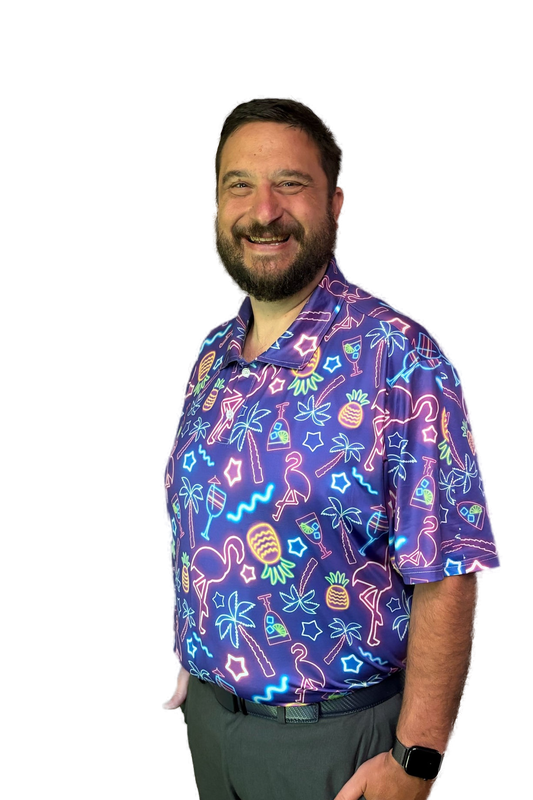
Will spent more than fifteen years building smarter systems for service businesses, most recently as Chief Technology Officer at a management consulting firm where he led a team of consultants and helped hundreds of MSPs and ITSPs turn their tech stacks into real growth engines. He's worked across the whole stack: RMM, PSA, quoting and billing workflows, automation, and custom reporting. He knows where these tools fail operators and how to make them work together.
Before Expected Outcomes, Will founded Will & Way Solutions, an automation and implementation practice for MSPs that needed their tools, books, and workflows aligned with how their business actually ran. Will is also a Rewst Diamond Partner. He and Joshua are co-founders of Expected Outcomes.
At EO, Will leads Configure, Sustain, and the build-out of Atlas: the dashboard and reporting layer that keeps the methodology running after the engagement closes. Configure is the handoff where methodology becomes implementation; it builds the operational systems that produce framework-grade data, and Atlas keeps those systems honest as the firm grows and people change. Will has also facilitated cyber security peer teams.
"Most businesses don't need more tools. They need their tools to work together, connected to the strategy that actually drives the business."
What we don't replace
The Service Leadership Index publishes the most rigorous benchmarking data the industry has, and operates peer teams of its own alongside that data. Peer teams (SLI, Evolve, MTA, plus BMK and TBG-lineage groups, among others) give owners the room to talk through decisions with people who've made them.
Joshua's MSP didn't really start growing until he joined a peer team. We believe every MSP should be in one, and both co-founders have led them: Joshua currently facilitates an "Empire Builders" team for Evolve and has facilitated Evolve's CFO peer teams, and Will has facilitated cyber security peer teams. We'd recommend a good peer team to any MSP owner who isn't already in one. Expected Outcomes is not a peer team, doesn't aspire to be one, and isn't trying to do what these groups do.
Expected Outcomes is built to complement, not replace. We speak SLI's language and use SLI's published anchors. We're built to fit alongside peer-team work rather than substitute for it. What we add is a different layer: the math behind which decision to make, on the specific P&L in front of you, sequenced by your firm's maturity stage, and the dashboards that keep that math live after the engagement closes.
What we add is the five-phase Transformation arc (Diagnose, Educate, Configure, Transform, Sustain), the engagement model that turns a benchmark report into a firm that operates on the methodology durably, after the engagement closes.
Peer groups give you the room to talk through decisions. Expected Outcomes gives you the math behind which decision to make, the implementation that lands it, and the dashboards that keep it honest.